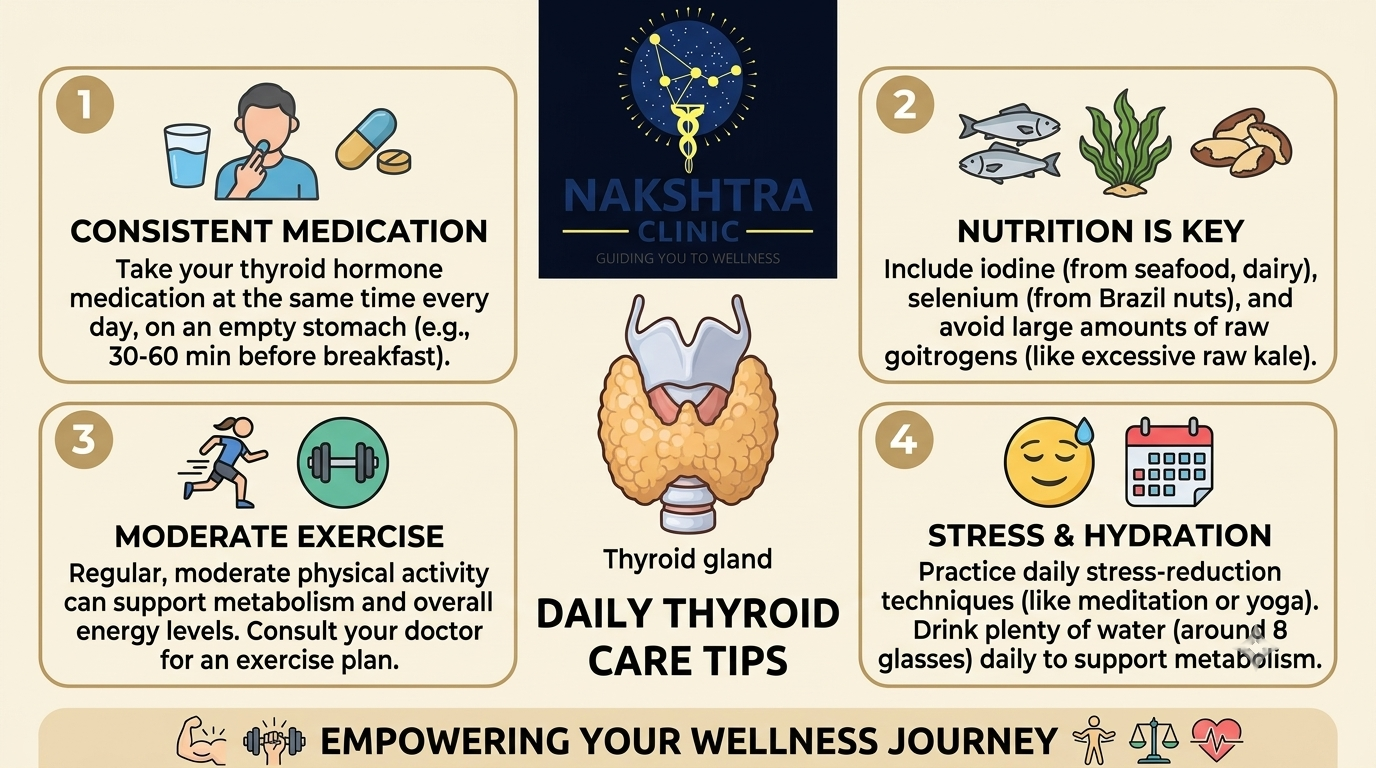
8 Daily Thyroid Care Tips: Diet, Medication, Exercise and Regular Monitoring
8 Daily Thyroid Care Tips: Diet, Medication, Exercise and Regular Monitoring
Thyroid disorders are common medical conditions that can affect metabolism, energy levels, weight, heart health and overall well-being. Whether a person has hypothyroidism or hyperthyroidism, consistent medical care and regular monitoring are important for managing the condition.
Many people focus only on medication after receiving a thyroid diagnosis. However, maintaining a consistent daily routine, following a balanced diet, staying physically active and attending follow-up appointments are also important parts of thyroid care.
Although lifestyle changes cannot replace prescribed treatment, healthy habits can support overall health and help people manage their condition more effectively.
Here are eight practical thyroid care tips to include in your daily routine.
1. Take Thyroid Medication as Prescribed
If you have hypothyroidism and your doctor has prescribed levothyroxine, taking it consistently is important.
Keep these points in mind:
-
Follow the exact dose prescribed by your physician.
-
Take the medicine at a consistent time every day.
-
Many patients are advised to take it on an empty stomach with water, usually 30–60 minutes before breakfast.
-
Calcium and iron supplements, certain antacids and some other medicines can interfere with its absorption.
-
Discuss the timing of other medicines and supplements with your doctor.
Do not change the dose, switch brands or stop thyroid medication without medical advice.
2. Follow a Balanced and Nutritious Diet
A balanced diet supports general health and helps maintain a healthy weight.
Include a variety of:
-
Seasonal fruits and vegetables.
-
Whole grains.
-
Pulses and legumes.
-
Suitable protein sources.
-
Nuts and seeds.
-
Healthy fats in appropriate amounts.
There is no single special diet that cures thyroid disorders. Your nutritional needs may vary depending on your diagnosis, medication and other medical conditions.
3. Avoid Unnecessary Thyroid Supplements
Many supplements and herbal products are promoted for thyroid health. However, taking them without medical advice may be harmful.
Excess iodine intake, in particular, can worsen certain thyroid conditions.
Before using iodine supplements, selenium supplements, herbal thyroid products or high-dose vitamins, discuss them with your physician.
A supplement should not replace prescribed thyroid medication.
4. Maintain a Healthy Exercise Routine
Regular physical activity supports cardiovascular health, energy levels and weight management.
Depending on your health and fitness level, suitable activities may include:
-
Walking.
-
Cycling.
-
Light strength training.
-
Yoga.
-
Stretching exercises.
Start gradually if you have been inactive for a long time.
People with uncontrolled hyperthyroidism, palpitations or significant muscle weakness should discuss exercise safety with their doctor before beginning an intensive workout routine.
5. Maintain a Healthy Sleep Schedule
Poor sleep can affect energy, mood and daily functioning.
Try to:
-
Maintain a regular bedtime.
-
Avoid excessive screen use before sleeping.
-
Keep your sleeping environment comfortable.
-
Limit late-night caffeine.
-
Follow a consistent daily routine.
If you experience persistent insomnia, unusual tiredness or sleep disturbances, discuss them with your physician.
6. Monitor Your Thyroid Levels Regularly
Thyroid hormone levels may change over time, and medication doses sometimes need adjustment.
Your doctor may recommend blood investigations such as:
-
TSH.
-
Free T4.
-
T3, when clinically required.
-
Thyroid antibody tests in selected cases.
The frequency of testing depends on your diagnosis, treatment, symptoms and medical history.
After starting or changing levothyroxine dosage, repeat TSH testing is commonly advised after approximately 6–8 weeks, according to the treating physician's plan.
Do not adjust medication based on symptoms or an online interpretation of your report.
7. Pay Attention to Changes in Your Body
Keep track of new or persistent symptoms.
For example:
Possible signs of underactive thyroid:
-
Increased tiredness.
-
Constipation.
-
Feeling unusually cold.
-
Dry skin.
-
Unexplained weight gain.
Possible signs of overactive thyroid:
-
Increased sweating.
-
Unexplained weight loss.
-
Tremors or shakiness.
-
Anxiety or restlessness.
-
Rapid or irregular heartbeat.
These symptoms can have causes other than thyroid disease. Share them with your doctor instead of changing medication yourself.
8. Attend Regular Medical Follow-Ups
Thyroid care is often a long-term process. Regular consultation helps your physician assess symptoms, review test reports and determine whether your treatment plan needs adjustment.
You should discuss your thyroid condition with your doctor if:
-
Your symptoms return or become worse.
-
You experience unexpected weight changes.
-
You notice new palpitations or tremors.
-
You are planning pregnancy or become pregnant.
-
You start taking new medicines or supplements.
-
You have difficulty following your medication schedule.
Pregnancy requires particular attention because thyroid hormone requirements and monitoring needs may change.
Common Thyroid Care Mistakes to Avoid
Avoid these common mistakes:
-
Stopping medication once symptoms improve.
-
Changing the medicine dose without consulting a doctor.
-
Taking calcium or iron supplements too close to thyroid medicine.
-
Depending on supplements instead of prescribed treatment.
-
Ignoring regular thyroid testing.
-
Following restrictive diets without medical or nutritional advice.
-
Comparing your medicine dose with another person's prescription.
Remember that thyroid treatment is individualised. The right treatment plan depends on your thyroid function, symptoms, age, medical history and other health conditions.
Thyroid Care Consultation at Nakshtra Clinic, Indore
Nakshtra Clinic provides physician consultation for hypothyroidism, hyperthyroidism and other thyroid-related concerns.
Dr. Gaurav Runwal, MBBS, MD (Internal Medicine), Consultant Physician and Diabetologist, offers medical evaluation, thyroid report review, medication management and follow-up guidance according to individual health needs.
If you have been diagnosed with a thyroid disorder or are experiencing symptoms of hormonal imbalance, professional medical guidance can help you follow an appropriate care plan.
Book a Consultation at Nakshtra Clinic
Address: 293, Nakshtra Clinic, In Front of Uttam Bhog Shop, Bombay Hospital Service Road, Scheme No. 94, Indore, Madhya Pradesh – 452010
Phone: +91 78983 87820
Website: https://www.drgauravrunwal.com/
Clinic timings: Monday to Saturday, 5:00 PM–9:00 PM; Sunday, 11:00 AM–1:00 PM.
Medical Disclaimer: This article is intended for general educational purposes only. Dietary and medication recommendations may vary depending on the individual's thyroid condition. Always follow your treating physician's advice.