10 Early Symptoms of Thyroid Disorders You Should Not Ignore
10 Early Symptoms of Thyroid Disorders You Should Not Ignore
Feeling unusually tired, experiencing unexplained weight changes or noticing increased hair fall? These symptoms may sometimes be associated with thyroid disorders.
The thyroid is a small, butterfly-shaped gland located at the front of the neck. It produces hormones that help regulate metabolism, body temperature, energy levels and several important body functions.
When the thyroid gland produces too little or too much hormone, it can affect different systems of the body. The symptoms may develop gradually and can sometimes be mistaken for common health problems.
Recognising these symptoms early and getting appropriate medical evaluation can help identify thyroid-related conditions and guide treatment.
At Nakshtra Clinic, Indore, Dr. Gaurav Runwal provides physician consultation for thyroid disorders and related health concerns.
What Are the Common Types of Thyroid Disorders?
Thyroid conditions can affect hormone production in different ways.
1. Hypothyroidism (Underactive Thyroid)
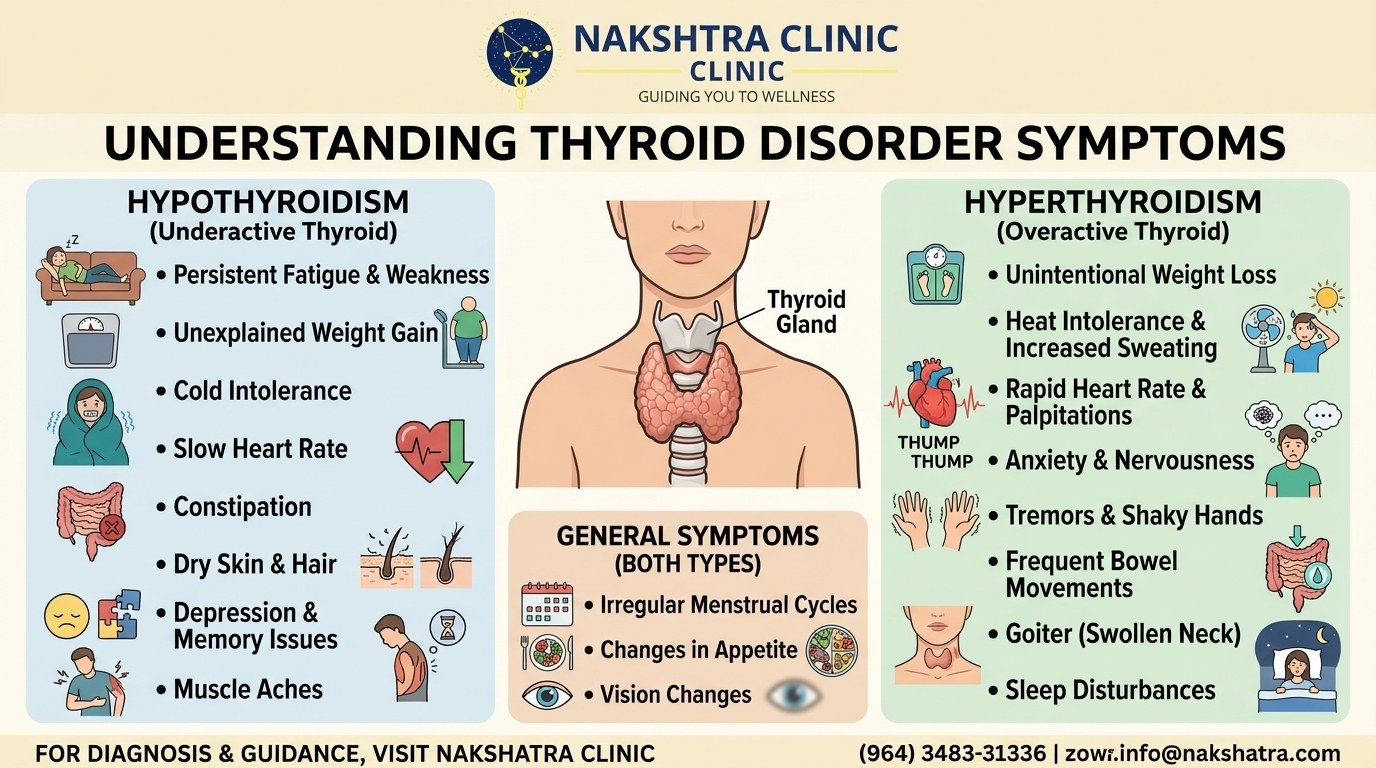
Hypothyroidism occurs when the thyroid gland does not produce enough thyroid hormones. As a result, several body functions may slow down.
Common symptoms include fatigue, weight gain, constipation, dry skin and increased sensitivity to cold.
2. Hyperthyroidism (Overactive Thyroid)
Hyperthyroidism occurs when the thyroid gland produces more thyroid hormones than the body needs.
It can increase the body's metabolic activity and may cause weight loss, excessive sweating, anxiety, tremors and a fast heartbeat.
Both conditions require proper medical evaluation because their symptoms can overlap with other illnesses.
10 Early Symptoms of Thyroid Disorders
1. Unexplained Weight Changes
Unexpected weight gain may occur with hypothyroidism, while unexplained weight loss despite a normal or increased appetite may occur with hyperthyroidism.
Weight changes can also have several other causes, so thyroid testing may be considered when they occur alongside other symptoms.
2. Persistent Tiredness and Fatigue
Feeling tired even after adequate sleep can be associated with an underactive thyroid.
Some people with hyperthyroidism may also experience fatigue due to disturbed sleep, muscle weakness or increased metabolic activity.
3. Hair Fall and Dry Skin
Thyroid hormone imbalance can affect skin and hair health.
People with hypothyroidism may notice dry skin, brittle hair or increased hair fall. However, hair loss can also result from nutritional deficiencies, stress and other medical conditions.
4. Increased Sensitivity to Cold or Heat
People with hypothyroidism may feel unusually cold, even when others are comfortable.
In contrast, people with hyperthyroidism may experience excessive sweating and increased sensitivity to heat.
5. Changes in Heartbeat
An overactive thyroid may cause a rapid or irregular heartbeat and a sensation of palpitations.
An underactive thyroid may be associated with a slower heart rate.
A new or persistent change in heartbeat should be medically evaluated.
6. Mood Changes and Anxiety
Thyroid hormone imbalance can affect emotional well-being.
Hypothyroidism may be associated with low mood, reduced concentration and memory difficulties. Hyperthyroidism may cause anxiety, irritability, nervousness and restlessness.
7. Constipation or Frequent Bowel Movements
An underactive thyroid can slow digestive activity and contribute to constipation.
An overactive thyroid may increase bowel movements or cause diarrhoea.
8. Menstrual Cycle Changes
Thyroid disorders can affect menstrual health.
Some women may experience heavier or irregular periods with hypothyroidism, while hyperthyroidism may be associated with lighter or less frequent periods.
Women experiencing persistent menstrual changes should discuss them with a qualified physician.
9. Muscle Weakness and Joint Discomfort
Thyroid hormone imbalance may contribute to muscle aches, weakness, stiffness and joint discomfort.
These symptoms can affect daily activities and should be assessed if they persist.
10. Swelling or a Lump in the Neck
An enlarged thyroid gland, known as a goitre, may cause visible swelling at the front of the neck.
Some thyroid nodules may also present as a lump. Any new neck swelling or lump should be evaluated by a doctor.
How Are Thyroid Disorders Diagnosed?
Symptoms alone cannot confirm a thyroid disorder. A physician may recommend investigations depending on the patient's symptoms and medical history.
Common investigations include:
1. TSH Test: Measures thyroid-stimulating hormone and is commonly used as an initial test to assess thyroid function.
2. Free T4 Test: Measures the level of free thyroxine hormone in the blood.
3. T3 Test: May be recommended in selected cases, particularly when hyperthyroidism is suspected.
4. Thyroid Antibody Tests: May help identify autoimmune thyroid conditions when clinically indicated.
5. Thyroid Ultrasound: May be recommended when there is a thyroid lump, enlargement or another structural concern. It does not replace blood tests for thyroid function.
The doctor decides which tests are appropriate based on individual findings.
When Should You Consult a Doctor?
Consider medical consultation if you experience:
-
Persistent fatigue without a clear reason.
-
Unexplained weight gain or weight loss.
-
Excessive hair fall.
-
Repeated palpitations or tremors.
-
Significant changes in menstrual cycles.
-
Persistent constipation or frequent bowel movements.
-
Swelling or a lump in the neck.
Seek urgent medical attention for severe chest pain, fainting, significant breathing difficulty or a very rapid heartbeat accompanied by serious symptoms.
Expert Thyroid Disorder Care at Nakshtra Clinic, Indore
Nakshtra Clinic provides medical consultation and management for hypothyroidism, hyperthyroidism and related thyroid concerns.
Dr. Gaurav Runwal, MBBS, MD (Internal Medicine), Consultant Physician and Diabetologist, evaluates thyroid-related symptoms and reviews thyroid function reports to guide appropriate medical management.
If you are experiencing possible thyroid symptoms, timely evaluation can help identify the underlying issue and support appropriate treatment and follow-up.
Book a Consultation at Nakshtra Clinic
Address: 293, Nakshtra Clinic, In Front of Uttam Bhog Shop, Bombay Hospital Service Road, Scheme No. 94, Indore, Madhya Pradesh – 452010
Phone: +91 78983 87820
Website: https://www.drgauravrunwal.com/
Clinic timings: Monday to Saturday, 5:00 PM–9:00 PM; Sunday, 11:00 AM–1:00 PM.
Medical Disclaimer: This article is for general educational purposes only. Symptoms mentioned here do not confirm a thyroid disorder. Consult a qualified physician for diagnosis and treatment.