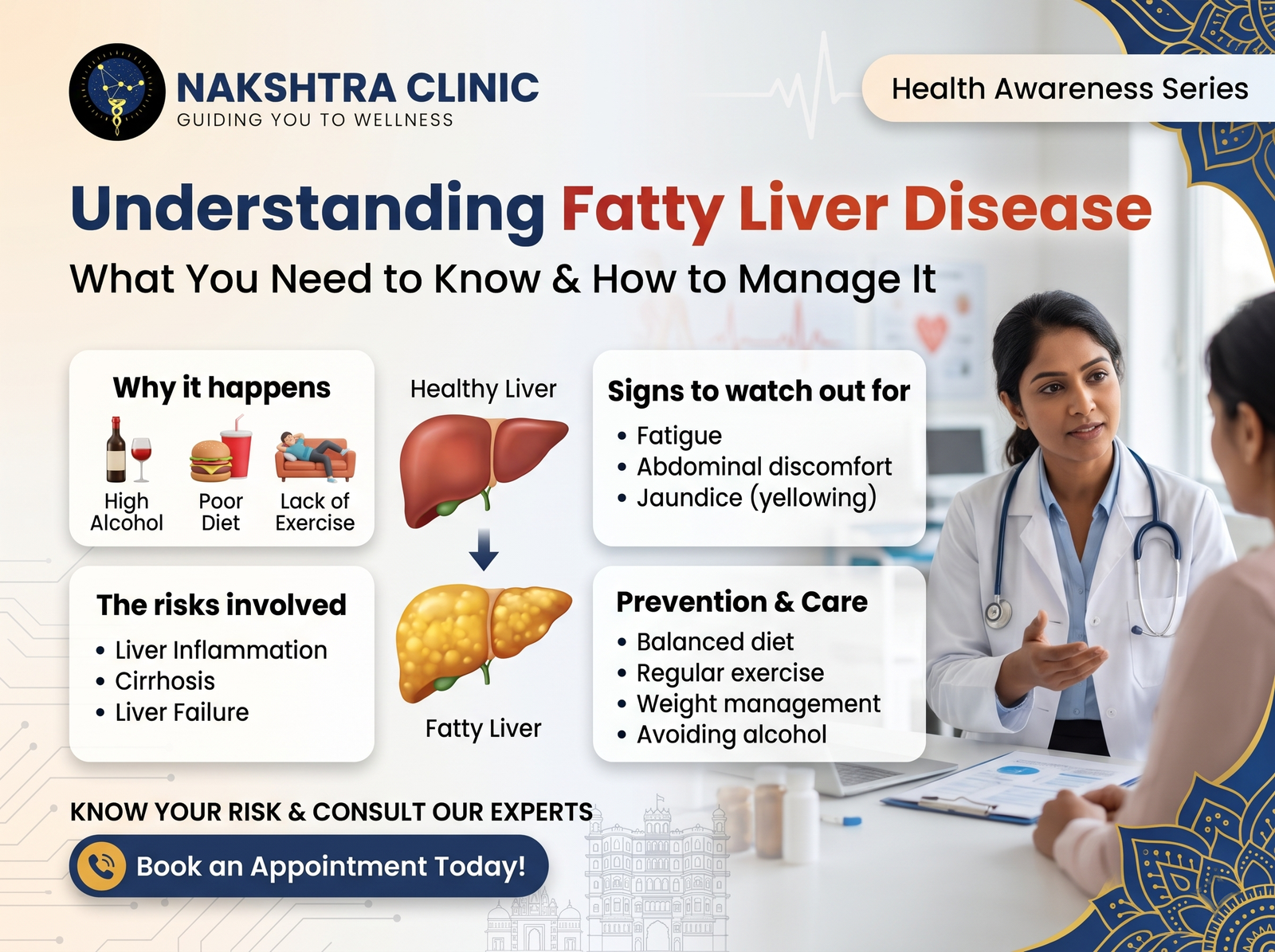
Fatty Liver Disease: Early Symptoms, Causes, Diagnosis and Lifestyle Management
Fatty Liver Disease: Early Symptoms, Causes, Diagnosis and Lifestyle Management
Fatty liver disease is a health condition in which excess fat accumulates inside the liver cells. In its early stages, it may not cause noticeable symptoms. Many people discover fatty liver during a routine ultrasound or blood investigation.
The liver plays an important role in digestion, metabolism, nutrient storage and removing harmful substances from the body. When excess fat accumulates in the liver, it may affect liver health and, in some individuals, lead to inflammation, liver damage and long-term complications.
Fatty liver is commonly associated with obesity, Type 2 diabetes, high cholesterol, high triglycerides and other metabolic conditions. Early identification, medical evaluation and appropriate lifestyle changes can help manage the condition.
At Nakshtra Clinic, Indore, Dr. Gaurav Runwal provides physician consultation and evaluation for liver-related and metabolic health concerns.
What Is Fatty Liver Disease?
Fatty liver disease refers to excessive fat accumulation in the liver. It is broadly associated with two major categories:
1. Metabolic Dysfunction-Associated Steatotic Liver Disease (MASLD)
This condition is associated with metabolic risk factors such as excess body weight, insulin resistance, Type 2 diabetes, high blood pressure and abnormal cholesterol levels.
2. Alcohol-Associated Liver Disease
Long-term or excessive alcohol consumption can lead to fat accumulation in the liver and may cause progressive liver damage.
The cause and severity of fatty liver can vary from person to person. A physician evaluates the patient's medical history, lifestyle and investigation reports to understand the condition.
What Are the Common Causes of Fatty Liver?
Several factors can increase the likelihood of developing fatty liver disease.
1. Obesity and Excess Body Weight
Excess body fat, particularly around the abdomen, is associated with a higher risk of fat accumulation in the liver.
2. Type 2 Diabetes
Insulin resistance and uncontrolled blood glucose levels are important metabolic risk factors associated with fatty liver.
3. High Cholesterol and Triglycerides
Abnormal levels of blood fats can contribute to metabolic health problems and increase the risk of fatty liver.
4. Unhealthy Dietary Habits
Frequent consumption of sugary beverages, processed foods and calorie-dense meals may contribute to weight gain and metabolic imbalance.
5. Physical Inactivity
A sedentary lifestyle can increase the risk of obesity, insulin resistance and fatty liver.
6. Alcohol Consumption
Excessive alcohol intake can cause liver fat accumulation and may lead to inflammation and liver injury.
What Are the Early Symptoms of Fatty Liver?
Fatty liver often develops without specific symptoms, especially in its early stages.
Some people may experience:
-
Persistent tiredness or fatigue
-
Discomfort in the upper right side of the abdomen
-
General weakness
-
A feeling of abdominal fullness
-
Unexplained changes in liver blood test results
These symptoms are not enough to confirm fatty liver. Some individuals may have no symptoms at all.
In advanced liver disease, warning signs may include yellowing of the eyes or skin, swelling in the abdomen or legs, easy bruising, confusion or vomiting blood. These symptoms require prompt medical assessment.
Who Is at Higher Risk of Fatty Liver?
You may have a higher risk of fatty liver if you have:
-
Type 2 diabetes
-
Obesity or excess abdominal fat
-
High cholesterol or triglycerides
-
High blood pressure
-
Insulin resistance
-
A sedentary lifestyle
-
Excessive alcohol consumption
-
A family history of certain liver conditions
People with metabolic risk factors should discuss appropriate screening and evaluation with their physician.
How Is Fatty Liver Diagnosed?
Fatty liver is diagnosed through a combination of medical history, physical examination and appropriate investigations.
Depending on the patient's condition, a physician may recommend:
1. Liver Function Tests (LFT)
These blood tests help assess certain aspects of liver health. Normal results do not always rule out fatty liver or significant liver disease.
2. Ultrasound of the Abdomen
An ultrasound may identify fat accumulation in the liver. However, it cannot determine every aspect of liver inflammation or scarring.
3. Blood Sugar Testing
Fasting blood glucose and HbA1c may be advised to assess diabetes and blood sugar control.
4. Lipid Profile
This test evaluates cholesterol and triglyceride levels.
5. Additional Liver Assessment
Depending on the clinical findings, further tests such as fibrosis assessment or specialist evaluation may be recommended.
The choice of tests depends on individual risk factors and clinical findings. Not every patient requires every investigation.
How Can Fatty Liver Be Managed?
Lifestyle modification is an important part of fatty liver management. The treatment plan depends on the cause, severity and associated medical conditions.
1. Maintain a Healthy Body Weight
For people who are overweight, gradual and medically appropriate weight reduction can help reduce liver fat. Avoid crash diets and rapid weight-loss methods.
2. Follow a Balanced Diet
Choose vegetables, fruits, whole grains, pulses, suitable protein sources and healthy fats. Limit sugary drinks, sweets and highly processed foods.
3. Exercise Regularly
Regular physical activity supports metabolic health. Walking, cycling and other suitable exercises can be included according to individual fitness and medical advice.
4. Manage Diabetes
Good blood glucose control is important for people with diabetes and fatty liver. Follow the treatment plan prescribed by your physician.
5. Control Cholesterol and Blood Pressure
Managing associated metabolic conditions can improve overall health and reduce cardiovascular risk.
6. Avoid Alcohol
People with fatty liver should discuss alcohol use with their physician. Avoiding alcohol is particularly important when alcohol-related liver disease or significant liver injury is suspected.
7. Avoid Self-Medication
Do not take unverified liver supplements, herbal products or medicines without medical advice. Some products may cause liver injury.
Can Fatty Liver Be Prevented?
Certain lifestyle habits may reduce the risk of developing fatty liver:
-
Maintain a healthy body weight.
-
Stay physically active.
-
Limit sugary beverages and processed foods.
-
Monitor blood glucose and cholesterol.
-
Avoid excessive alcohol consumption.
-
Attend medical check-ups when risk factors are present.
Prevention and management should be based on individual health needs.
When Should You Consult a Physician?
You should consider medical consultation if:
-
Your ultrasound report mentions fatty liver.
-
Your liver enzyme levels are repeatedly abnormal.
-
You have diabetes, obesity or high cholesterol.
-
You experience persistent abdominal discomfort or unexplained fatigue.
-
You have a history of excessive alcohol consumption.
Do not ignore an abnormal liver report simply because you do not have symptoms. A physician can help determine whether further testing or specialist referral is required.
Liver Health Consultation at Nakshtra Clinic, Indore
Nakshtra Clinic offers physician consultation for liver-related health concerns, metabolic conditions and associated medical problems.
Dr. Gaurav Runwal, MBBS, MD (Internal Medicine), is a Consultant Physician and Diabetologist. The clinic website also lists his advanced training from the Institute of Liver and Biliary Sciences (ILBS), New Delhi.
During consultation, the doctor may review symptoms, medical history, ultrasound findings and liver function reports. Based on the clinical assessment, an appropriate management plan or specialist referral may be advised.
If you are looking for a physician consultation for fatty liver in Indore, timely evaluation can help you understand your liver health and take appropriate steps.
Book a Consultation at Nakshtra Clinic
Address: 293, Nakshtra Clinic, In Front of Uttam Bhog Shop, Bombay Hospital Service Road, Scheme No. 94, Indore, Madhya Pradesh – 452010
Phone: +91 78983 87820
Website: https://www.drgauravrunwal.com/
Clinic timings: Monday to Saturday, 5:00 PM–9:00 PM; Sunday, 11:00 AM–1:00 PM.
Medical Disclaimer: This article is for general educational purposes only. It does not replace professional medical advice, diagnosis or treatment. Consult a qualified physician for individual medical concerns.