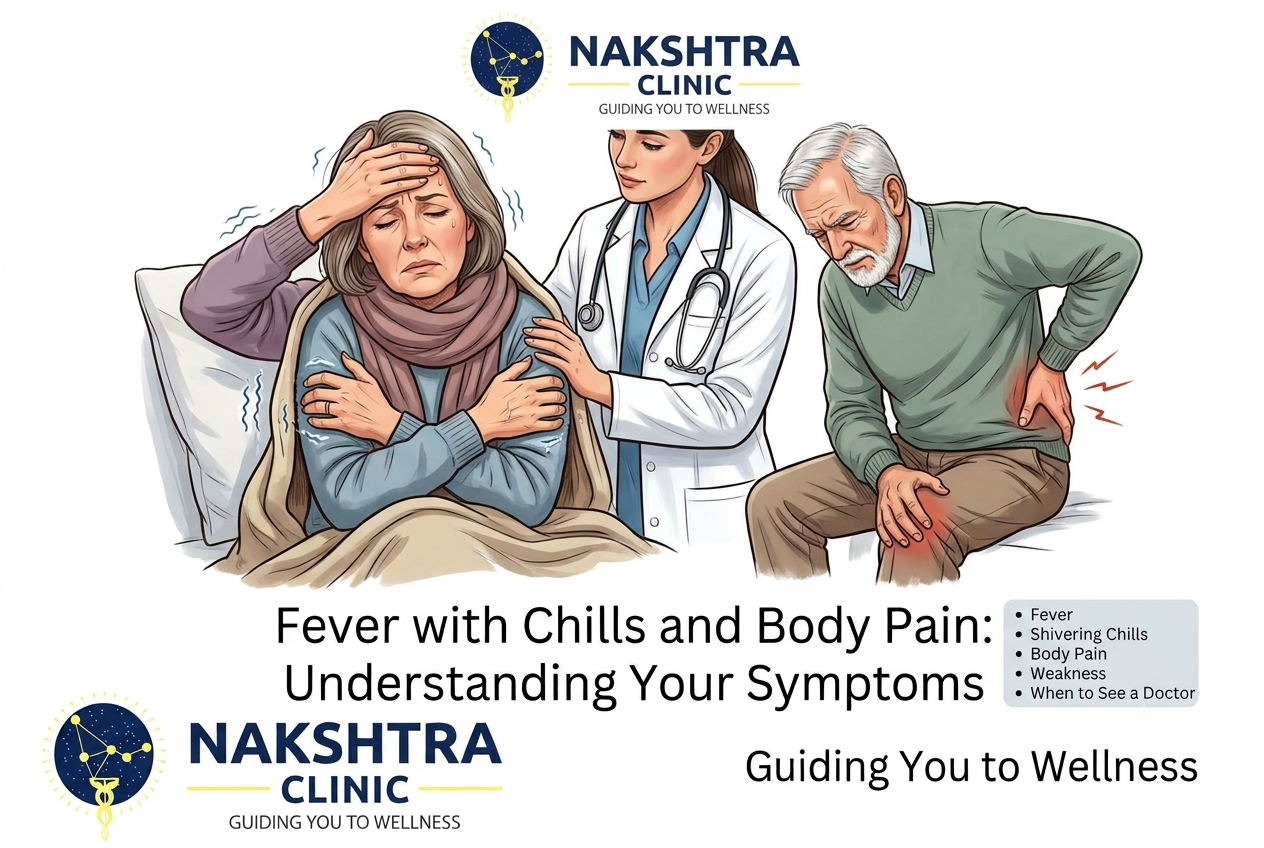
Fever with Chills and Body Pain: Causes, Symptoms and Warning Signs
Fever with Chills and Body Pain: Causes, Symptoms and Warning Signs
Fever accompanied by chills, headache and body pain can make everyday activities difficult. These symptoms commonly occur when the body responds to an infection. While some fever episodes are caused by self-limiting viral illnesses, others may be associated with conditions such as dengue, malaria, typhoid or other infections that require medical evaluation.
Many people try to identify the cause of fever based on symptoms alone. However, different infections can produce similar symptoms. Understanding the warning signs and seeking timely medical advice are important for appropriate diagnosis and treatment.
At Nakshtra Clinic, Indore, Dr. Gaurav Runwal provides physician consultation and evaluation for fever and acute illnesses.
Why Do Fever, Chills and Body Pain Occur Together?
Fever is a rise in body temperature that commonly occurs as part of the body's response to infection or inflammation.
Chills may develop when the body is adjusting its temperature. A person may feel cold or start shivering even when their body temperature is elevated.
Body pain, headache and weakness can occur because of the body's immune response and the underlying illness.
The combination of these symptoms does not point to one specific disease. The cause needs to be assessed through medical history, examination and investigations when required.
5 Possible Causes of Fever with Chills and Body Pain
1. Viral Fever
Viral infections can cause fever, headache, body aches, fatigue, sore throat, cough or a runny nose.
Most uncomplicated viral illnesses improve with supportive care, but persistent or worsening symptoms should be medically assessed.
2. Dengue Fever
Dengue is a mosquito-borne viral infection. Common symptoms may include:
-
High fever
-
Severe headache
-
Pain behind the eyes
-
Muscle and joint pain
-
Nausea or vomiting
-
Skin rash in some cases
Warning signs such as severe abdominal pain, persistent vomiting, bleeding, unusual drowsiness or difficulty breathing require urgent medical assessment.
3. Malaria
Malaria is a mosquito-borne parasitic infection. Symptoms can include:
-
Fever with chills
-
Sweating
-
Headache
-
Muscle aches
-
Weakness
-
Nausea or vomiting
Some people experience episodes of chills and fever, but symptoms do not always follow a predictable pattern. Testing is important when malaria is suspected.
4. Typhoid Fever
Typhoid is a bacterial infection that can spread through contaminated food or water.
Possible symptoms include:
-
Persistent fever
-
Headache
-
Weakness and fatigue
-
Abdominal discomfort
-
Reduced appetite
-
Constipation or diarrhoea in some cases
Medical evaluation and appropriate testing help determine whether typhoid is present.
5. Chikungunya
Chikungunya is another mosquito-borne viral infection. It commonly causes sudden fever and significant joint pain.
Other symptoms may include:
-
Muscle pain
-
Headache
-
Joint swelling
-
Skin rash
-
Fatigue
Joint discomfort can sometimes continue even after the fever improves.
Symptoms That Should Not Be Ignored
Although many fever episodes are mild, certain symptoms may indicate a more serious illness.
Seek prompt medical assessment if fever is accompanied by:
-
Severe or persistent abdominal pain
-
Repeated vomiting
-
Bleeding from the nose or gums
-
Blood in vomit or stools
-
Difficulty breathing
-
Severe weakness or fainting
-
Confusion or unusual drowsiness
-
Reduced urine output
-
Severe dehydration
These symptoms may require urgent care. Do not wait for the fever to become higher before seeking help.
How Can a Doctor Identify the Cause of Fever?
A physician considers several factors before deciding on a diagnosis.
These may include:
1. Medical History: Duration of fever, travel history, mosquito exposure, recent illness and other symptoms.
2. Physical Examination: Assessment of temperature, hydration, pulse, blood pressure and other clinical signs.
3. Blood Investigations: Depending on the suspected infection, tests may include a complete blood count (CBC), dengue testing, malaria testing or other investigations.
4. Additional Tests: Depending on symptoms, the doctor may recommend tests for typhoid, urinary infection, respiratory infection or other possible causes.
Not every patient needs every test. Investigations should be selected according to clinical findings and the stage of illness.
Why Should You Avoid Self-Diagnosis?
Fever, chills and body pain can occur in several different infections. Taking antibiotics without a confirmed medical indication may cause side effects and contribute to antibiotic resistance.
Similarly, medicines that are suitable for one type of fever may not be appropriate in another situation. If dengue is suspected, avoid aspirin and ibuprofen unless specifically advised by a treating clinician because of potential bleeding risk.
A proper medical assessment helps guide safe and appropriate treatment.
Fever Consultation at Nakshtra Clinic, Indore
Nakshtra Clinic provides physician consultation for fever, seasonal illnesses and acute infections.
Dr. Gaurav Runwal, MBBS, MD (Internal Medicine), Consultant Physician and Diabetologist, evaluates fever-related symptoms and recommends investigations or treatment according to the patient's condition.
If you are experiencing persistent fever, chills, body pain or other concerning symptoms, timely medical evaluation can help identify the underlying cause.
Book a Consultation at Nakshtra Clinic
Address: 293, Nakshtra Clinic, In Front of Uttam Bhog Shop, Bombay Hospital Service Road, Scheme No. 94, Indore, Madhya Pradesh – 452010
Phone: +91 78983 87820
Website: https://www.drgauravrunwal.com/
Clinic timings: Monday to Saturday, 5:00 PM–9:00 PM; Sunday, 11:00 AM–1:00 PM.
Medical Disclaimer: This article is intended for general educational purposes only. It does not replace professional medical advice, diagnosis or treatment. Consult a qualified physician for individual medical concerns.