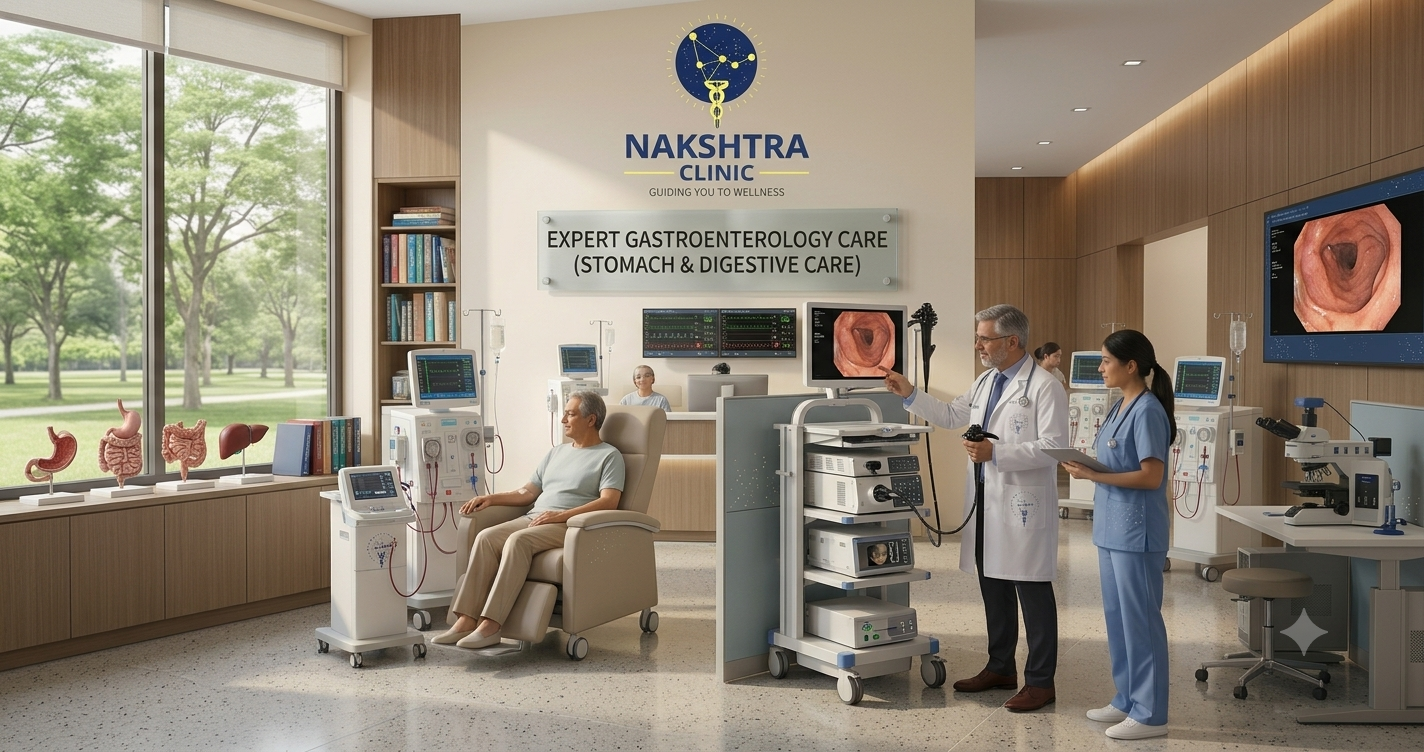
Expert Gastroenterology Care: Understanding Digestive Health, Common Disorders and Prevention
Expert Gastroenterology Care: Understanding Digestive Health, Common Disorders and Prevention
The digestive system plays an important role in maintaining overall health. It helps break down food, absorb essential nutrients and eliminate waste from the body. From the stomach and intestines to the liver and pancreas, every digestive organ contributes to proper bodily functioning.
However, digestive problems are common and can affect people of different age groups. Symptoms such as acidity, bloating, abdominal pain, constipation and irregular bowel movements may occur due to dietary habits, infections or underlying gastrointestinal conditions.
Understanding digestive health and recognising unusual symptoms early can help individuals seek appropriate medical care.
At Nakshtra Clinic, Indore, patients can seek medical consultation and guidance regarding common digestive concerns and overall gastrointestinal health.
What Is Gastroenterology?
Gastroenterology is a branch of medicine that focuses on the digestive system and the organs involved in digestion.
A gastroenterologist is a specialist who evaluates and manages conditions affecting the:
-
Oesophagus
-
Stomach
-
Small intestine
-
Large intestine
-
Liver
-
Gallbladder
-
Pancreas
Gastroenterology care helps identify digestive disorders, evaluate persistent symptoms and determine appropriate treatment.
Common Digestive Problems and Disorders
Digestive problems can range from temporary discomfort to chronic medical conditions that require regular management.
1. Acidity and Acid Reflux
Acid reflux occurs when stomach acid moves back into the oesophagus. It may cause heartburn, a sour taste in the mouth, chest discomfort and regurgitation.
2. Gastritis
Gastritis refers to inflammation of the stomach lining. It may cause upper abdominal discomfort, nausea, bloating and indigestion. Common causes include Helicobacter pylori infection and certain medications.
3. Constipation
Constipation involves infrequent bowel movements or difficulty passing stools. Low fibre intake, inadequate fluid intake, inactivity and certain medications may contribute to this condition.
4. Irritable Bowel Syndrome (IBS)
IBS is a functional gastrointestinal disorder that can cause abdominal pain, bloating, diarrhoea, constipation or alternating bowel habits.
5. Gastroenteritis
Gastroenteritis is inflammation of the stomach and intestines, commonly caused by infections. Symptoms may include diarrhoea, vomiting, stomach cramps and sometimes fever.
6. Fatty Liver Disease
Fatty liver disease involves excess fat accumulation in the liver. It is associated with conditions such as obesity, diabetes and metabolic disorders. It may not cause noticeable symptoms in the early stages.
7. Peptic Ulcers
Peptic ulcers are sores that develop in the lining of the stomach or upper small intestine. Common causes include H. pylori infection and long-term use of certain pain-relieving medications.
Common Symptoms of Digestive Disorders
Digestive conditions can cause different symptoms depending on the affected organ and underlying cause.
Some common warning signs include:
-
Frequent acidity or heartburn
-
Persistent bloating
-
Abdominal pain or cramps
-
Nausea and vomiting
-
Constipation
-
Frequent loose motions
-
Difficulty swallowing
-
Loss of appetite
-
Unexplained weight loss
-
Persistent changes in bowel habits
Blood in stools, black tarry stools, severe abdominal pain, persistent vomiting or difficulty swallowing require prompt medical evaluation. Vomiting blood or severe sudden abdominal pain requires emergency medical attention.
Major Causes and Risk Factors of Digestive Problems
Digestive health can be affected by several lifestyle, dietary and medical factors.
Common contributing factors include:
-
Irregular eating schedules
-
Excessive consumption of spicy or fatty foods
-
Low fibre intake
-
Inadequate hydration
-
Lack of physical activity
-
Food intolerances
-
Bacterial or viral infections
-
Excessive alcohol consumption
-
Smoking
-
Certain medications
-
Chronic stress
-
Existing metabolic conditions
Identifying the underlying cause is important for selecting the right treatment.
7 Practical Ways to Improve Digestive Health
1. Eat Fibre-Rich Foods
Include fruits, vegetables, whole grains, legumes and other fibre-rich foods in your diet. Dietary fibre supports healthy bowel movements.
2. Maintain Proper Hydration
Drink adequate water throughout the day. Proper hydration supports digestion and helps prevent constipation.
3. Follow Regular Meal Timings
Eating meals at consistent times and avoiding frequent overeating may help improve digestive comfort.
4. Stay Physically Active
Regular walking and physical activity support bowel movement and overall metabolic health.
5. Limit Highly Processed Foods
Reduce excessive consumption of fried foods, sugary beverages and heavily processed meals.
6. Identify Food Triggers
Certain foods may worsen acidity, bloating or other digestive symptoms in some individuals. Keeping track of food-related symptoms can help identify personal triggers.
7. Avoid Unnecessary Medication
Frequent use of certain painkillers and other medicines may irritate the digestive tract. Take medication only as advised by a healthcare professional.
Important Tests for Digestive Health
When digestive symptoms persist, doctors may recommend specific investigations depending on the patient's condition.
Common diagnostic tests include:
Complete Blood Count (CBC): Helps identify anaemia and certain signs of infection or inflammation.
Liver Function Test (LFT): Evaluates important markers related to liver health.
Ultrasound Abdomen: Helps examine abdominal organs such as the liver, gallbladder, kidneys and other structures.
Stool Examination: May help identify intestinal infections, parasites or other abnormalities.
H. pylori Testing: Helps detect Helicobacter pylori infection, which is associated with gastritis and peptic ulcers.
Upper GI Endoscopy: Allows doctors to examine the oesophagus, stomach and upper small intestine using a flexible camera.
Colonoscopy: Helps examine the large intestine and identify certain intestinal conditions.
Not every patient needs all these investigations. The doctor recommends suitable tests based on symptoms and medical evaluation.
When Should You Consult a Gastroenterologist?
Occasional digestive discomfort may improve with lifestyle adjustments, but persistent or recurring symptoms should not be ignored.
Consider medical consultation if you experience:
-
Frequent acidity or heartburn.
-
Repeated abdominal pain.
-
Persistent bloating or constipation.
-
Diarrhoea that does not improve.
-
Difficulty swallowing.
-
Unexplained weight loss.
-
Repeated nausea or vomiting.
-
Changes in bowel habits that continue over time.
Early evaluation helps identify underlying digestive conditions and determine appropriate treatment.
Gastrointestinal Health and Medical Consultation at Nakshtra Clinic, Indore
Good digestive health is essential for nutrient absorption, metabolism and overall well-being.
Nakshtra Clinic, Indore, encourages individuals to pay attention to digestive symptoms and seek appropriate medical consultation when problems persist.
Whether you experience recurring acidity, stomach discomfort, bloating, irregular bowel movements or concerns related to liver health, medical evaluation can help determine the possible cause and guide further care.
Maintaining a balanced diet, following healthy routines and seeking timely medical advice are important steps towards better digestive health.
Conclusion
Digestive health is an important part of overall wellness. Persistent stomach problems should not be ignored, as they may sometimes indicate underlying gastrointestinal conditions.
Healthy eating habits, adequate hydration, regular physical activity and timely medical consultation can help maintain better digestive health.
Pay attention to your body's warning signs and take the right steps towards a healthier digestive system.
For digestive health guidance and general medical consultation, connect with Nakshtra Clinic, Indore.