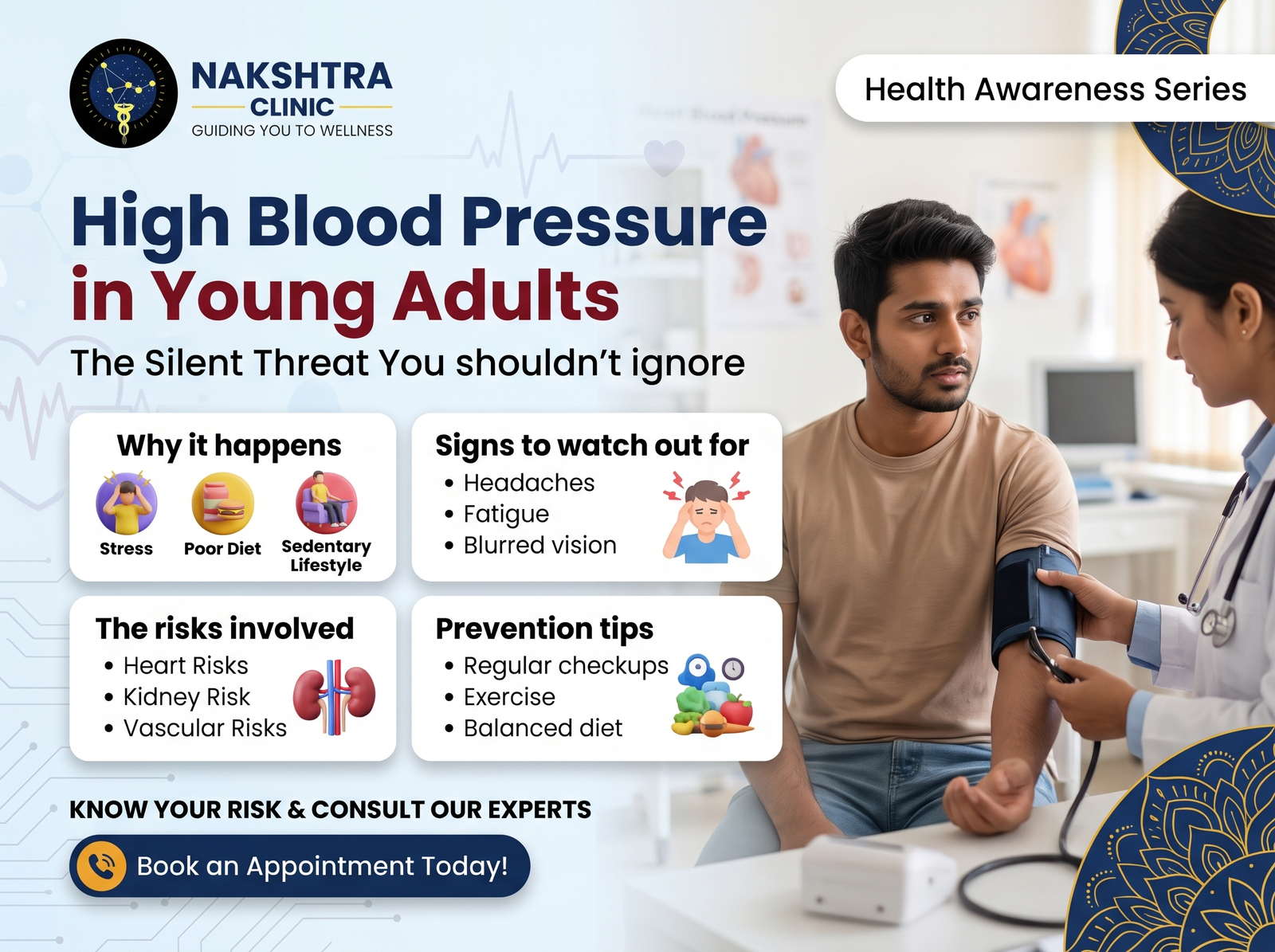
High Blood Pressure in Young Adults: Causes, Symptoms, Risks and Management
High Blood Pressure in Young Adults: Causes, Symptoms, Risks and Management
High blood pressure, also known as hypertension, is a common health condition that can affect people of different age groups, including young adults. Many people believe that hypertension is a concern only for older individuals. However, young adults can also develop high blood pressure due to lifestyle factors, family history, medical conditions and other risk factors.
One of the major concerns with hypertension is that it may not produce noticeable symptoms in its early stages. A person may feel completely healthy while their blood pressure remains consistently elevated. Regular monitoring and timely medical evaluation are important for identifying the condition and reducing the risk of long-term complications.
At Nakshtra Clinic, Indore, Dr. Gaurav Runwal provides physician consultation and medical care for blood pressure management and related health concerns.
What Is High Blood Pressure?
Blood pressure is the force exerted by circulating blood against the walls of the arteries. It is recorded using two numbers:
-
Systolic pressure: The pressure when the heart contracts and pumps blood.
-
Diastolic pressure: The pressure when the heart relaxes between beats.
A blood pressure reading that remains higher than the recommended range may indicate hypertension. Diagnosis should be based on properly taken readings and clinical evaluation rather than a single measurement.
Why Are Young Adults Developing High Blood Pressure?
Several factors can contribute to hypertension in younger individuals.
1. Unhealthy Eating Habits
Frequent consumption of processed foods, packaged snacks, fast food and meals containing excess salt may increase the risk of high blood pressure.
2. Lack of Physical Activity
Long working hours, desk-based jobs and limited exercise can contribute to weight gain and cardiovascular risk.
3. Chronic Stress and Poor Sleep
Continuous stress, irregular sleep schedules and inadequate sleep may negatively affect blood pressure and overall health.
4. Overweight and Obesity
Excess body weight can increase the workload on the heart and is associated with a higher risk of hypertension.
5. Smoking and Alcohol Consumption
Smoking damages blood vessels, while excessive alcohol consumption can contribute to elevated blood pressure.
6. Family History
People with a family history of hypertension may have a greater likelihood of developing the condition.
7. Underlying Medical Conditions
Certain kidney disorders, hormonal conditions and other health problems can cause or contribute to high blood pressure, particularly in younger patients.
What Are the Symptoms of High Blood Pressure?
Hypertension is often called a silent condition because many people do not experience clear symptoms.
Some individuals may report:
-
Frequent headaches
-
Dizziness
-
Blurred vision
-
Unusual fatigue
-
Palpitations
-
Shortness of breath
These symptoms are not specific to hypertension and can occur due to several other medical conditions. The only reliable way to identify high blood pressure is through proper measurement.
Severe symptoms such as chest pain, significant breathing difficulty, sudden weakness, confusion or sudden vision changes require urgent medical attention.
Why Should Young Adults Take Hypertension Seriously?
If high blood pressure remains uncontrolled over time, it can gradually damage blood vessels and place additional stress on important organs.
Possible complications include:
-
Heart disease
-
Stroke
-
Kidney damage
-
Heart failure
-
Damage to blood vessels
-
Increased cardiovascular risk
Early identification and appropriate treatment can help reduce these risks.
How Is High Blood Pressure Diagnosed?
A physician evaluates blood pressure readings along with the patient's medical history, lifestyle and other risk factors.
Depending on the clinical situation, evaluation may include:
-
Repeated blood pressure measurements
-
Home blood pressure monitoring
-
Blood glucose testing
-
Lipid profile
-
Kidney function tests
-
Urine examination
-
ECG or other investigations when clinically indicated
In younger patients, a physician may also assess whether an underlying medical condition or medication is contributing to elevated blood pressure.
Practical Ways to Manage High Blood Pressure
Managing hypertension often requires consistent lifestyle changes and, when prescribed, appropriate medication.
1. Reduce Salt Intake
Limit excessive salt, packaged foods and high-sodium snacks.
2. Maintain a Healthy Weight
A balanced diet and regular physical activity can support better blood pressure control.
3. Exercise Regularly
Walking, cycling and other suitable physical activities can improve cardiovascular health. Follow an exercise plan appropriate to your health condition.
4. Improve Sleep Quality
Maintain a consistent sleep routine and aim for sufficient sleep.
5. Avoid Smoking
Stopping tobacco use is an important step towards protecting heart and blood vessel health.
6. Monitor Blood Pressure
Maintain a record of readings taken with a properly used, validated blood pressure monitor.
7. Follow Medical Advice
Do not start, stop or change blood pressure medication without consulting your physician.
When Should You Consult a Physician?
Consider a medical consultation if your blood pressure readings are repeatedly elevated, you have a family history of hypertension, or you have other risk factors such as diabetes, obesity or kidney disease.
Do not ignore consistently high readings simply because you feel healthy. Early medical evaluation can help identify the cause and determine an appropriate management plan.
Blood Pressure Management at Nakshtra Clinic, Indore
Nakshtra Clinic provides general physician consultation and blood pressure evaluation under the care of Dr. Gaurav Runwal, MBBS, MD (Internal Medicine), Consultant Physician and Diabetologist.
The consultation may include assessment of blood pressure readings, review of medical history, evaluation of associated risk factors and guidance on appropriate investigations and treatment.
Dr. Gaurav Runwal is also associated with SAIMS Medical College and PG Institute as a Professor and Consultant Physician, as listed on the clinic website.
If you are looking for a physician for high blood pressure consultation in Indore, timely evaluation can be an important step towards better long-term health.
Book a Consultation at Nakshtra Clinic
Address: 293, Nakshtra Clinic, In Front of Uttam Bhog Shop, Bombay Hospital Service Road, Scheme No. 94, Indore, Madhya Pradesh – 452010
Phone: +91 78983 87820
Website: https://www.drgauravrunwal.com/
Clinic timings: Monday to Saturday, 5:00 PM–9:00 PM; Sunday, 11:00 AM–1:00 PM.
Medical Disclaimer: This article is for general educational purposes only. It does not replace professional medical advice, diagnosis or treatment. Consult a qualified physician for individual medical concerns.