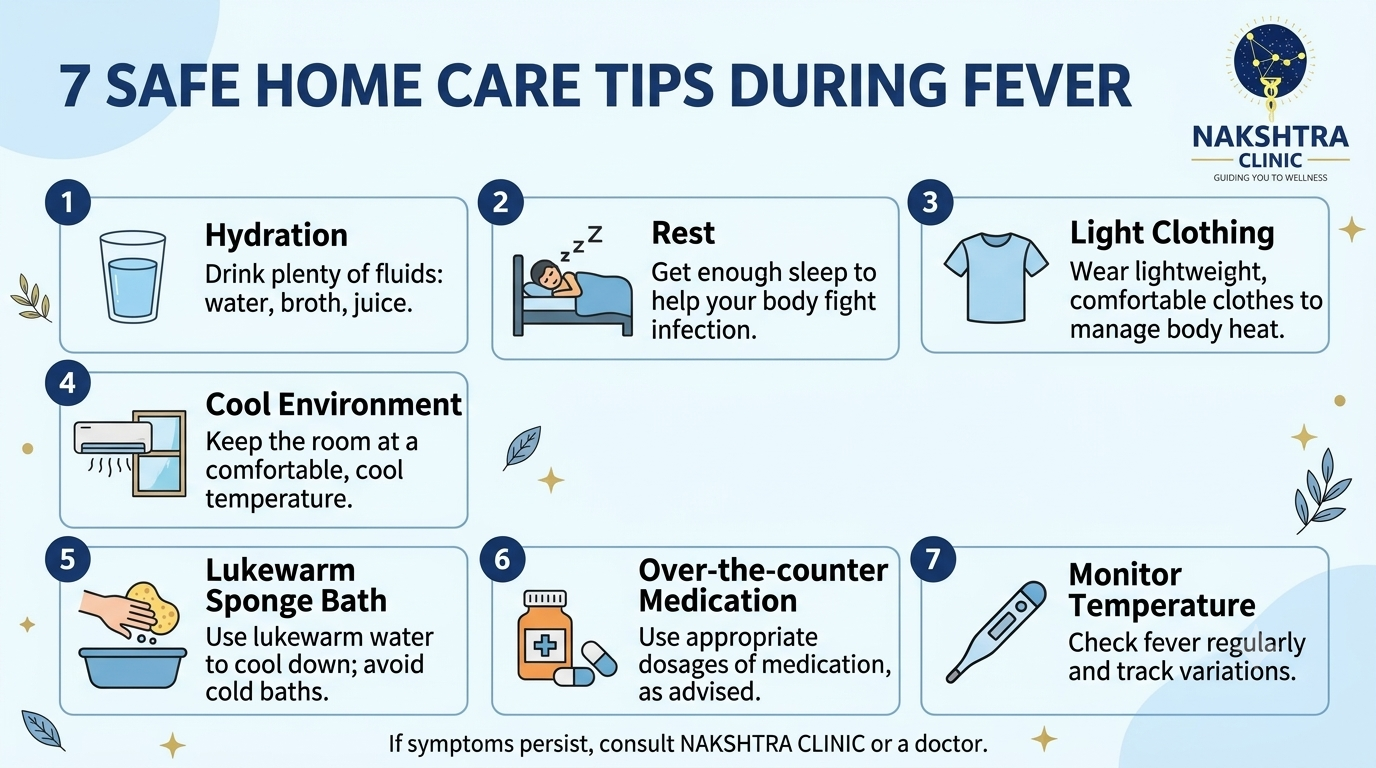
7 Safe Home Care Tips During Fever: Hydration, Rest and Important Precautions
7 Safe Home Care Tips During Fever: Hydration, Rest and Important Precautions
Fever is one of the most common symptoms of illness. It can occur due to viral infections, bacterial infections and several other medical conditions. Along with an increased body temperature, a person may experience weakness, headache, chills, muscle pain and reduced appetite.
While home care can help improve comfort during a mild illness, it is important to understand that fever is a symptom rather than a disease itself. The right approach depends on its underlying cause.
Following safe home care practices, staying hydrated and monitoring symptoms can support recovery. However, home remedies should never replace medical evaluation when symptoms are persistent, severe or unusual.
Here are seven useful tips to follow during fever.
1. Drink Enough Fluids to Prevent Dehydration
Fever can increase fluid loss through sweating and faster breathing. Dehydration may cause weakness, dizziness, dry mouth and reduced urine output.
Helpful hydration practices include:
-
Drink water regularly throughout the day.
-
Take small, frequent sips if you feel nauseated.
-
Use oral rehydration solution (ORS) when appropriate, particularly if diarrhoea or vomiting is also present.
-
Include soups and other suitable fluids.
-
Monitor urine output and signs of dehydration.
People with medical conditions requiring fluid restriction should follow their doctor's advice regarding fluid intake.
2. Get Adequate Rest
The body needs energy to respond to an illness. Adequate rest can help you manage fatigue and discomfort.
During fever:
-
Avoid strenuous physical activity.
-
Get sufficient sleep.
-
Take breaks during daily activities.
-
Return to your normal routine gradually as you feel better.
Do not force yourself to exercise or work through significant weakness.
3. Monitor Your Body Temperature
Checking your temperature helps you understand whether the fever is improving, remaining stable or getting worse.
Keep these points in mind:
-
Use a reliable digital thermometer.
-
Follow the manufacturer's instructions.
-
Record the temperature and the time of measurement.
-
Note any associated symptoms.
-
Share the readings with your physician if the fever persists.
A temperature reading alone cannot identify the cause of fever. Your symptoms and clinical condition also matter.
4. Eat Light and Nutritious Food
You may have less appetite during an illness. Instead of forcing large meals, try eating smaller portions of easy-to-tolerate foods.
Some suitable options may include:
-
Khichdi
-
Dal and rice
-
Vegetable soup
-
Soft cooked vegetables
-
Fruits that you can comfortably tolerate
-
Other balanced, easily digestible meals
Try to maintain adequate nutrition and fluid intake. If you have diabetes or another medical condition, follow your individual dietary advice.
5. Wear Comfortable Clothing and Avoid Excessive Covering
Chills may make you feel cold during fever. However, covering yourself with multiple heavy blankets can cause discomfort and excessive warmth.
You can:
-
Wear lightweight, comfortable clothing.
-
Keep the room at a comfortable temperature.
-
Use a light blanket if you experience chills.
-
Avoid ice-cold baths or alcohol rubs.
-
Use lukewarm sponging only if advised or if it helps with comfort.
The aim is to stay comfortable rather than force the body temperature down rapidly.
6. Take Medicines Only as Advised
Do not take antibiotics or multiple fever medicines without medical advice.
Important precautions include:
-
Use fever-reducing medicines only according to appropriate medical or label instructions.
-
Avoid combining medicines that contain the same active ingredient.
-
Do not start antibiotics without a clinician's recommendation.
-
If dengue is suspected, avoid aspirin and ibuprofen unless specifically advised by your treating clinician.
-
Consult a physician if you have liver disease, kidney disease, pregnancy or other conditions that may affect medicine safety.
Never use someone else's prescription or change your regular medication without consulting your doctor.
7. Prevent the Spread of Infection
If fever is caused by an infectious illness, taking precautions can help protect other people.
Follow these basic practices:
-
Wash your hands regularly.
-
Cover your mouth and nose while coughing or sneezing.
-
Avoid sharing personal items such as towels and drinking glasses.
-
Maintain good ventilation in indoor spaces.
-
Stay home when you are unwell, where possible.
-
Follow medical advice regarding isolation and return to work or school.
If mosquito-borne illnesses are suspected, prevent mosquito bites and remove standing water around your surroundings.
When Is Home Care Not Enough?
Home care is not a substitute for medical attention when warning signs appear.
Seek urgent medical care if you experience:
-
Difficulty breathing
-
Chest pain
-
Confusion or unusual drowsiness
-
Severe abdominal pain
-
Persistent vomiting
-
Bleeding from the nose or gums
-
Fainting or severe weakness
-
Signs of significant dehydration
-
Seizures
Medical assessment is also important for persistent or worsening fever, or fever in people who are pregnant, elderly, immunocompromised or have significant underlying health conditions.
Infants younger than three months with a temperature of 38°C (100.4°F) or higher need immediate medical assessment.
Common Mistakes to Avoid During Fever
Some common mistakes can delay proper diagnosis or create additional health risks.
-
Taking antibiotics without a prescription.
-
Ignoring persistent fever.
-
Using multiple medicines without checking their ingredients.
-
Assuming every fever is viral.
-
Avoiding fluids despite sweating or vomiting.
-
Relying only on home remedies when warning signs are present.
Remember, appropriate treatment depends on identifying the cause of fever.
Expert Fever Care at Nakshtra Clinic, Indore
Nakshtra Clinic provides medical consultation and evaluation for fever, seasonal illnesses and acute infections.
Dr. Gaurav Runwal, MBBS, MD (Internal Medicine), Consultant Physician and Diabetologist, evaluates fever-related symptoms and advises suitable investigations and treatment according to the patient's condition.
If you have persistent fever, recurring chills, body pain or symptoms that are not improving, consult a physician rather than relying only on home care.
Book a Consultation at Nakshtra Clinic
Address: 293, Nakshtra Clinic, In Front of Uttam Bhog Shop, Bombay Hospital Service Road, Scheme No. 94, Indore, Madhya Pradesh – 452010
Phone: +91 78983 87820
Website: https://www.drgauravrunwal.com/
Clinic timings: Monday to Saturday, 5:00 PM–9:00 PM; Sunday, 11:00 AM–1:00 PM.
Medical Disclaimer: This article is for general educational purposes only and does not replace professional medical advice, diagnosis or treatment. Home care recommendations may not be suitable for every individual. Consult a qualified physician when needed.